If you drive an hour and a half northeast of Traverse City, in Michigan’s northern lower peninsula, you’ll discover a small town with history and beauty that attracts visitors from as close as the Cherry Capital to as far away as Wisconsin.
Walloon Lake is a 35-square-mile village in eastern Charlevoix County with a population of fewer than 300 people — although that number easily doubles or triples during the busy tourist season, which starts at the end of June and runs until the end of August.
Although Walloon Lake has no legal autonomy of its own (it sits within the borders of Melrose Township), it does have its own post office, which has been assigned the 49796 ZIP code. It also boasts a recorded history that dates to 1872 and includes Ernest Hemingway’s formative years. There’s also a hotel that prides itself on top-tier guest service.
“We’re the hidden gem of the area, right on Walloon Lake,” says Emily Emmott, general manager of the Hotel Walloon. “We’re nestled in this little village that’s peaceful, quiet, and quaint, with a lot of activities in the area. It’s a really pretty place where you can escape the hustle and bustle of cities.”
Before there were metropolises, the region’s first inhabitants were Native Americans who called the 6.9-square-mile Walloon Lake, with 30 miles of shoreline, Muqua Nebis (bear water).
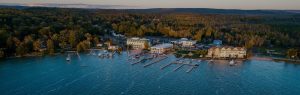
John Jones Jr. and his family settled along the shores of what was called Bear Lake in 1872. By 1874, Jones was instrumental in encouraging the Grand Rapids and Indiana Railroad to build through the region to service the logging industry. The first train depot was named Melrose, after early local surveyor Mel Rose.
The area took the name Tolcott, then Talcott, until local butcher J.R. Hass suggested Walloon Lake on Sept. 22, 1900.
Hass reportedly saw the name on an old railroad map. Nobody knew where the name came from or how it ended up on the map, but legend has it that a group of Walloons from Belgium (no traces of them remain) had settled along Bear Lake many years earlier. The community and the lake soon became known as Walloon Lake, although the lake is still connected to Little Traverse Bay by a stream known as Bear River.
Jones’ railroad and the Melrose Depot spawned Walloon Lake’s first wave of tourism, with trains bringing visitors to soak up the fresh northern Michigan air and enjoy recreational activities like fishing, swimming, and sailing.
Before long, the “downtown” area at the foot of the spring-fed lake boasted three stores, a bowling alley, a bath house, and a hotel. Within a few years, there were a dozen hotels and boarding houses around the lake, as well as an increasing number of private cottages. To get there, residents and visitors boarded steamboats that delivered them and their seasonal belongings to their summer abodes.
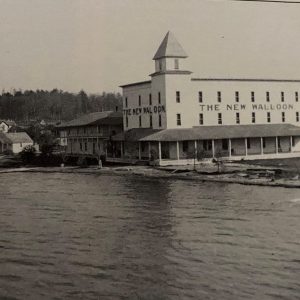
In those days, railroad companies built hotels to create destinations for city folk to escape the heat of urban summers in places like Cincinnati, Indianapolis, Chicago, and Grand Rapids. These resort hotels publicized “beautiful views, great fishing, and boating, along with socializing with other resort goers.” As a result, hundreds of hotels were built in northern Michigan, which was being billed as “Vacationland” in publicity campaigns.
The tourist boom, along with the area’s logging industry, wouldn’t last. The final passenger boat to ply the waters of the lake ceased operations in 1915. By the late 1920s most of the lodging establishments had closed, as tourists were building their own homes on the lake. The train depot operated until 1928, when automobile transportation became more prevalent.
Between the 1960s and 1990s, Walloon Lake became a bit of a ghost town. A series of historical signs in the downtown’s Circle Park shed light on the community’s early days.
“Over the past decade or so, Walloon Lake has woken up from its decades-long slumber,” says Dianna Stampfler, president of the Promote Michigan public relations firm. “Now, it’s a thriving waterfront community.”
In recent years, a resurgence has transpired, with old establishments getting new leases on life as successful restaurants and shops.

The Walloon Lake Inn, for example, was built in 1891 as a quaint hotel on the shores of the lake. Originally called Fern Cottage, it was a destination for many visitors and served as a docking point for the steamboats that would take travelers to hotels or to their cottages along the lake.
Renamed the Walloon Lake Inn in 1981, the location operated as a bed and breakfast and a restaurant. Today it’s an upscale restaurant that was totally renovated in 2014.
Other restaurants include the casual Barrel Back of the Hotel Walloon, the Walloon Junction Bar & Grill, and the Walloon Watershed. There’s also The Iron Goat and the Rumpus Room coffee shops, and the Sweet Tooth Ice Cream Shop. Popular local destinations include Legacy Watersports & Marina, the Pied Piper Roller Rink, and the Crooked Tree Library.
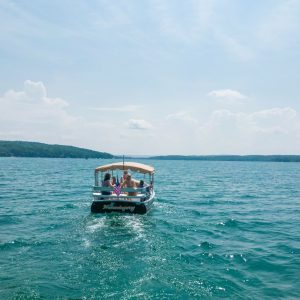
What’s more, Tommy’s Boat Rentals, Tommy’s Ski and Wake School, and Surf Starters offer training in a variety of water sports, including waterskiing, tubing, and wakeboarding.
The modern-day tourism boom is credited in part to real estate developer and Walloon Lake native Jonathan Borisch (founder of Borisch Manufacturing Corp. in Kentwood, near Grand Rapids), who, along with his son, Matt, purchased a significant chunk of commercial land in the area. Part of it was converted into the Hotel Walloon and its accompanying Barrel Back restaurant, as well as other businesses.
A Nov. 27, 2012, story in the Petoskey News Review outlined the pair’s plans.
“When my dad was growing up here, the village was a bustling community — 50 years ago — the idea is to get people to come back in by making it a welcoming place,” Matt Borisch said in the article.
Like most tourist destinations, Walloon Lake hit a speed bump during the COVID-19 pandemic. Prior to the mandatory closures that followed, tourism in northern Michigan had an annual economic impact of about $4 billion. In 2020, it was cut in half.
“Before the pandemic, summer was a busy time for us,” says Emmott, of the Hotel Walloon. “When the pandemic hit, we stayed open — however, we furloughed all but one of our employees and the three managers. During the pandemic it was very quiet. We sold 13 rooms during the whole month of April that year.
“Once the state started reopening and people were able to travel again, we got inundated with guests and it ended up being our best year, (and) 2021 followed suit. People came to us because they knew we were clean and because of our service. They felt safe traveling to us.”
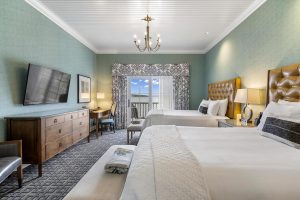
The original Hotel Walloon was opened in the 1890s by Mrs. James Hass. In 1900, the New Walloon was built by Alfred Hass near the town’s steamer dock. Today’s Hotel Walloon is a 32-room boutique hotel built in 2015 on the site of the New Walloon.
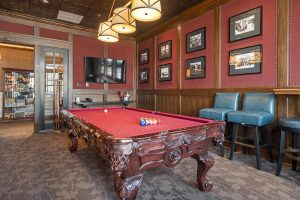
Emmott, who is from Traverse City, says she barely knew about Walloon Lake until she landed her position at the hotel.
“I was amazed at how busy we get here during the summer,” she says. “Every year, we get a lot of the same people coming back, as well as new people. We’re at 90 to 93 percent occupancy during the busy season.”
Emmott says her staff bends over backward to make each guest’s visit as personalized as possible, adding humidifiers, wedge pillows, and the guest’s favorite soft drinks to the rooms before they check in.

“We try to make sure our guests’ stays are tailored to their preferences,” she says. “The biggest thing to me is just our service in general. We’re known for going above and beyond for our guests.”
According to Emmott, the hotel’s visitors come from nearby Traverse City, downstate, Ohio, Chicago, and Wisconsin. She says the whole business community works together to make Walloon Lake a premier travel destination.
“Every year we try to figure out what more we can do to drive business to the village,” she says. “It’s kind of a group effort to think up new specialty weekends (and) what collaborations we can put together with other businesses.”
Current special events include the Walloon Lake Writer’s Retreat, a nod to Ernest Hemingway’s connection to the village (see sidebar). This year’s Writer’s Retreat took place April 16-19 at the Hotel Walloon and featured best-selling author Karen Dionne, whose books “The Marsh King’s Daughter” and “The Wicked Sister” are set in the Upper Peninsula.
Other events include the Little Village 4th of July Celebration, the Walloon Woodies Boat Show and Classic Car Show on Aug. 1, and the Autumn Festival, slated for Sept. 19-20, which will include a chili cook-off.
In 2023, Melrose Township and Walloon Lake were named a Monarch City USA. It’s the fourth community in northern Michigan (joining Boyne City, Kalkaska, and Elk Rapids) to pledge to provide environments and native areas for pollinator plants to grow wild, thus feeding and protecting monarch butterflies and other flying wildlife. Plans are underway for an event that will take place this August, tentatively named Wings of Walloon, to celebrate the butterflies.
In addition, “Last year, the Melrose Township Downtown Development Authority (DDA) built a new pavilion in Melrose Township Park that’s used for groups hosting family reunions, birthdays, and other group events,” Stampfler says.
Future DDA plans include a boardwalk and trail that will travel east from the park toward U.S.-131 and loop back to the new sidewalks that were installed a couple of years ago along M-75. These projects are designed to make the village more accessible to all and create more natural experiences.
Walloon Lake welcomes visitors year-round, but summer is the best time to visit, according to locals, as the lake is particularly stunning and inviting. Most area businesses — many of which target boaters and water sports enthusiasts — are open during the summer months.
Rates for Hotel Walloon can run as low as $125 per night, but are limited to four-night stays during the busy season. For those seeking more private, family-style accommodations, cottage rentals also are available and can run between $2,100 and $7,000 a week.
“Walloon Lake is a hidden gem in northern Michigan,” Stampfler says. “It started as a vacation destination more than a century ago, and it is once again.”
Hemingway’s Inspiration
READERS OF THE WORKS OF ERNEST HEMINGWAY can visit Walloon Lake to get an idea of what inspired some of his writing.
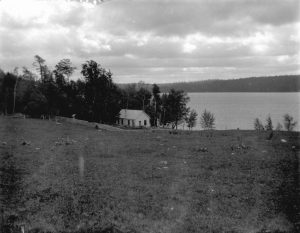
A year before he was born in 1899, his family first traveled to northern Michigan and settled in Walloon Lake (then known as Tolcott). The Hemingway family bought several plots of land around the lake and in 1900 they built a cottage they called Windemere on the northern shore.
The cottage would serve as Hemingway’s summertime boyhood home, as the family still made their full-time home in Chicago.
They reportedly traveled to Windemere by ship several times a year in spite of the fact that, at the time, it was a long and difficult trip. While in northern Michigan, Hemingway spent most of his time fishing, swimming, tending to the family farm, and camping, and it’s there that he eventually discovered writing.
“The Hemingways were among the earliest travelers to the area,” says Dianna Stampfler, president of the Promote Michigan public relations firm. “Their family home still stands, but it isn’t open to the public.”
She notes that most people believe it was the woods and waters of northern Michigan that created the persona of Hemingway that typically comes to mind — the hunter, fisher, explorer, and writer.
As a teenager, Hemingway traveled independently and started making the trip by automobile. In 1921 he married his first wife, Hadley Richardson, in nearby Horton Bay. Soon after, they left the area and never returned, except at one point in 1951.

Hemingway’s “The Nick Adams Stories” and its main character were said to be heavily influenced by his adventures and experiences in northern Michigan. Some of his boyhood friends also served as models for many of his characters.
On Nov. 24, 1968, the family cottage in Resort Township was listed on the National Register of Historic Places. Hemingway’s presence in Walloon Lake led to its dedication as a Michigan Historic Site in 2010, which is commemorated by a dual-sided historic marker in Melrose Park in the center of the Village of Walloon Lake.
“Today, visitors can actually walk in his footsteps as the Michigan Hemingway Society has spent years identifying sites where he once visited,” Stampfler says.
— By Tim Keenan