Local catering businesses are being asked, more than ever, to provide sophisticated dining experiences that entertain as well as nourish, offer options for people with varying dietary requirements, and maintain the highest level of culinary quality — all while dealing with increasing material and labor costs.
And they’re doing it, in both the corporate and social catering segments.
“We’re definitely in a growth mode,” says Robert Esshaki, co-owner and CEO of Rudy’s Hospitality Group in Clarkston, which includes Rudy’s Smokehouse Catering and Rudy’s Prime Steakhouse.
Rudy’s is the sole food service provider for United Wholesale Mortgage (UWM) in Pontiac, as well as the Mortgage Pros and Flagstar Bank headquarters in Troy. Esshaki says more catering contracts will add to his company’s $25 million in annual revenue and its employee count of 175 people.
“The off-premises catering business is up,” says Joe Vicari, president and CEO of the Joe Vicari Restaurant Group, comprised of Andiamo Catering and Event Management and 12 restaurant locations. “We’ll go to barns, theaters, factories. Our outside catering has been up double-digits, probably 35 percent, over the last five years since COVID-19.”
Chef Bobby Nahra, owner of Encore Catering and Banquet in St. Clair Shores, which operates event venues Encore and The Blossom Heath Inn, and is the preferred caterer for the Royal Oak Music Theatre, M1 Concourse, Michigan Central, and Belle Isle, agrees.
“On the corporate side, the post-COVID-19 (business) is a lot better,” Nahra says. “People and businesses are wining and dining again. They’re doing business the old-fashioned way.”
According to IBISWorld, a market research company in New York, the catering and food service industry in Michigan encompasses more than 400 registered businesses employing more than 4,700 people, and brings in $336.3 million. The broader food service contractor industry generates $1.6 billion and employs an additional 17,300 workers across the state.
Michigan is part of a global catering industry that was worth $175 billion in 2025, and it’s expected to grow to $332.45 billion by 2035, according to a report by Expert Market Research in Sheridan, Wyo.
The United States is the world’s largest national catering market, characterized by a well-developed corporate catering ecosystem, a large and active events and wedding catering segment, and a mature contract food service sector serving healthcare, education, and government institutions. The U.S. also leads the way in in-flight catering operations.
Catering in the Great Lakes State, specifically southeast Michigan, is a microcosm of the national scene, with a market segmented into corporate catering, wedding catering, and social events catering. Each sector presents opportunities and challenges to those in the business of feeding the masses.
In May, ezCater, a Boston company offering workplace food solutions, published data at its 2026 Catering Growth Forum showing that 91 percent of U.S. workplaces plan to spend the same or more on catering services in 2026, with daily and weekly employee meal programs growing 26 percent year-over-year, as organizations use catering as a strategic tool for workforce productivity and office attendance management.
Expert Market Research says the decision by corporations, healthcare institutions, educational facilities, and government entities to outsource their food service operations to specialist catering providers, rather than managing in-house cafeterias, is the most significant structural driver of global catering services’ market growth.
For the customer companies, outsourcing delivers cost predictability, quality specialization, regulatory compliance management, and access to professional culinary talent that most organizations can’t develop cost-effectively in-house.
“The biggest trend right now, as companies wrestle with what returning to the office looks like, is how do we retain top talent?” says Jason Olinik, senior vice president of operations and partnerships at Rudy’s Hospitality Group.
“A subsidized meal program is a great way to do that. It gets people together, drives innovation, drives retention, and drives recruiting. Having a really great restaurant-style program on campus is a great way to get people together, (and) make actually coming in to work worth it. A great way to do that is to lower the price of food.”
When Rudy’s Hospitality Group first took over the food service at UWM in 2014, the mortgage company had 700 employees. It now has close to 10,000 workers, and Rudy’s has grown with the mortgage giant.
Rudy’s service at UWM features eight food stations with a variety of selections. There are no subsidies, and all the food is prepared at UWM kitchens.
Flagstar Bank’s service also is provided via an on-site kitchen, but its food service is subsidized in order to keep the cost to employees lower.
At Mortgage Pros, Rudy’s Hospitality Group stocks a micro-market that’s serviced from Rudy’s Prime Steakhouse. Rudy’s also is in the process of building a commissary in Troy, which is expected to open late this year or early next year, from which it can service Mortgage Pros and future corporate clients.
According to industry reports and the caterers themselves, corporate clients now expect caterers to offer regularly rotating menus featuring locally sourced ingredients, allergen-transparent labeling, culturally diverse cuisine options, and plant-based alternatives that accommodate the dietary preferences of increasingly health-conscious workforces.
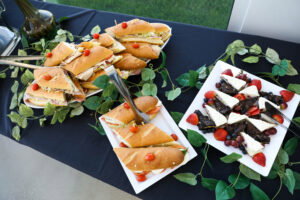
Rudy’s Hospitality Group in Troy is getting ready to open a commissary to service some of its corporate clients. // Photos by Mark Kocina
“When people are going to the same building all the time, they need variety,” Esshaki says. “Food fatigue is a real thing. What separates our company from a lot of our competitors is we’re big into prepared food, micro-markets with grab-and-go options, and different kinds of selections.”
Says Olinik: “Corporate catering used to be heavily box lunches and basics. Now it’s getting a little more into themed buffets, more action stations, a lot more charcuteries, platters where people can graze throughout a meeting, and themed events with menus that are curated for that event.”
According to Vicari, business is back to what it was prior to the COVID-19 pandemic, but he says he doesn’t see businesses being more extravagant.
“As of 2025 and 2026, (corporate business is) back to probably pre-COVID-19 type of activity for us,” he says. “The counts aren’t as high as they used to be, the guest lists are smaller. But I don’t see corporate customers getting more extravagant. They’re purchasing what they purchased before COVID-19.”
He does note that off-site corporate catering is experiencing growth.
“Our clients are bringing in people from out of town, and they want to stay in their factory during the workday,” Vicari says. “We’re equipped to go anywhere and do anything.”
In addition, catering for events and weddings is experiencing a transformation.
The global catering services market is benefiting from sustained growth in premium event and wedding catering, according to Expert Market Research, as consumers prioritize memorable dining experiences for social celebrations following a period of deferred event spending, mostly due to the COVID-19 pandemic.
The trend toward premium, unique, and experiential catering concepts is lifting average spending per event and expanding the addressable market for specialist event caterers. Luxury social occasions represent particularly high-value growth opportunities for specialist catering operators with premium service and logistics capabilities.
Joe Vicari Restaurant Group and Encore Catering and Banquet offer full-service events that include stages, video walls, sound systems, lighting, drapery, furniture, flowers, and more.
Social event and wedding catering is experiencing “premiumization” as couples and event organizers invest in unique menu designs, live cooking stations, and immersive food experiences that differentiate their events.
The growing integration of themed dining, interactive food presentation, and experiential catering concepts within high-value social events is supporting above-market pricing growth within the premium non-contractual catering segment.
“People want to see a show,” says Vicari, whose company is a fixture at major downtown events such as the Ford Fireworks and the Chevrolet Detroit Grand Prix. “Buffets have to have different styles of serving trays. A square container with Sterno under it is out of style. You have to have round ones or oval-shaped ones. They’re looking for different foods. We can do Greek, Italian — obviously, Asian, Polish. We can do all of that. They’re looking for variety. They want to be different.”
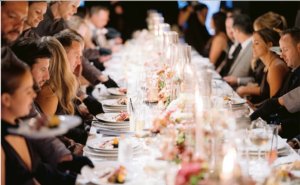
A relatively new addition to the metro Detroit event venue inventory is The Seven in Ferndale. It’s co-owned by Tom Violante Jr. and Patrick VanLehn, who also operate Sushi Kabar.
The latter company started by putting sushi programs in hospitals, universities, and grocery stores. The growth allowed the owners to invest in office space, and they purchased a 20,000-square-foot former Ferndale Electric building. Both agreed the space, with its unique architectural features, would make an “incredible” event venue. It opened for business after an $8 million investment — $2 million for the building and $6 million in renovations.
“What we’re seeing in the contracts we’re signing for this year and next is that the desire is to have more sophistication — something that’s more experiential, so it’s not just a simple plated dinner,” VanLehn says. “We’re seeing requests for strolling dinners with multiple courses, making the food more interesting. Same with the bar service; (people want) signature drinks or something that speaks to the event or company.”
“One of the trends is action stations,” Esshaki adds. “People love to see something as simple as someone cutting meat for them, or watching someone make a stir-fry. Action stations always attract a lot of interest.”
Nahra echoes Esshaki’s thoughts. “People like action stations, where they can watch chefs actually making a pizza after they pick the toppings. They love watching the chefs prepare stuff.”
Nahra says his chefs use the newest in electric pizza oven technology to craft a pizza while guests watch. Less than two minutes later, the product is ready to eat.
“We have these new tabletop electric pizza ovens that can make a 12-inch pizza in 90 seconds,” Nahra explains. “We can put six of these on a table and we’re knocking out six pizzas every two minutes.”
Another trend in the catering business, according to Nahra, is serving pre-set micro plates.
“You put a slice of a 1- or 2-ounce Wagu off of a tomahawk, a dollop of potato, then a vegetable and sauce of your choice. I literally have chefs with tweezers putting micro greens on the finished plate. Our young chefs love that stuff. It gets them out in front, which adds some stage presence. Everybody wants to be a celebrity chef.”

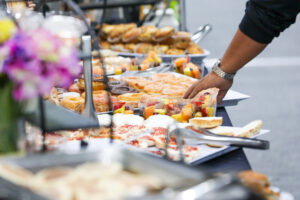
Joe Vicari of the Joe Vicari Restaurant Group says catering customers “want to see a show.” // Photos by Joe Vicari Restaurant Group
The Seven and its origin firm, Sushi Kabar, have taken advantage of the popularity of raw fish dishes from Japan. It uses this expertise to offer its special variety.
“We’re a sushi company, and we offer a sushi table with a sushi experience with a chef right in front of people,” Violante says. “It provides theater and it provides delicious food. People love the sushi experience.”
Two other trends in the wedding catering industry involve the size and location of wedding parties.
“We’ve seen the (hall wedding) business go down,” Vicari says. “Traditional weddings, going to a dining hall, have been declining for the last six or seven years. In the last 10 years, the counts for weddings have gone down. A big wedding back in the day was 650 people. Today, a big wedding is 375 to 400 people. Most of the weddings are 250 to 300 guests.”
Those who do decide to have a wedding, a mitzvah, or some other major party in a hall, end up transforming the facility to suit their taste or the theme of the event.
“The people today dress up the hall with lighting, drapery, and flowers,” Vicari says. “Some people spend more on flowers than what we charge them for the food.”
Violante recalls a recent fundraiser for FAR Therapeutics that was hosted at The Seven.

“For the FAR Therapeutics gala, we created a community in our space,” he says. “The food was good, there was a good atmosphere, and we raised a lot of money. This charity invested a little more in their event, and that investment paid off by having a better experience and a better outcome.”
VanLehn adds, “We choreographed and co-created an evening that blended the entertainment with the food, so they were able to get people in a great mood and get their message across. They were excited to be there and give.”
The other trend is weddings that take place in various nontraditional locations, despite the added cost involved.
“Younger people today want to have their party in a barn or a factory,” Vicari says. “It costs so much more. If you come to our hall, you don’t pay for tables, chairs, plates, and glasses. When you go off premises, you have to pay for all of that. It’s probably 30 percent more to have a party at a barn up in Metamora or somewhere.”
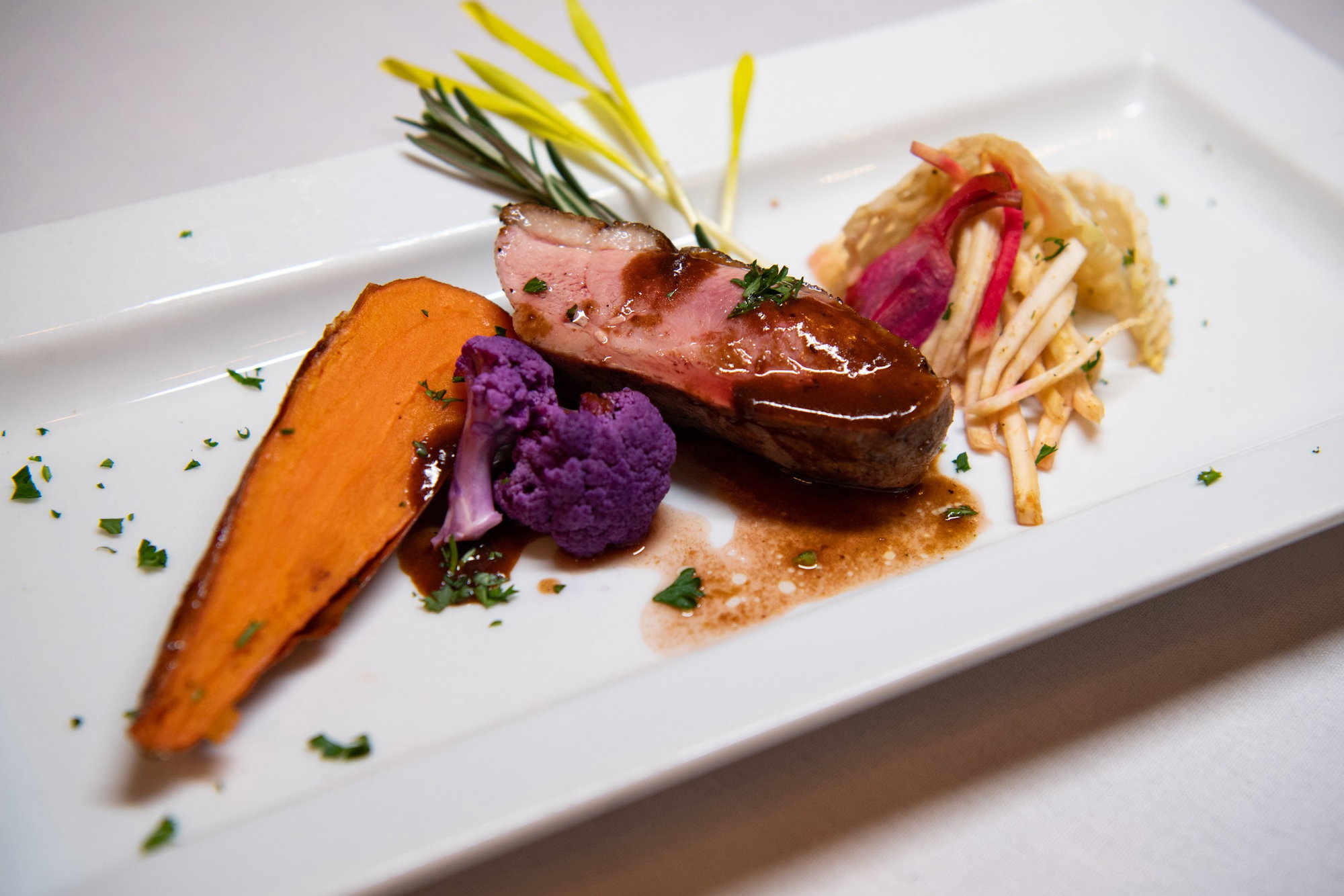
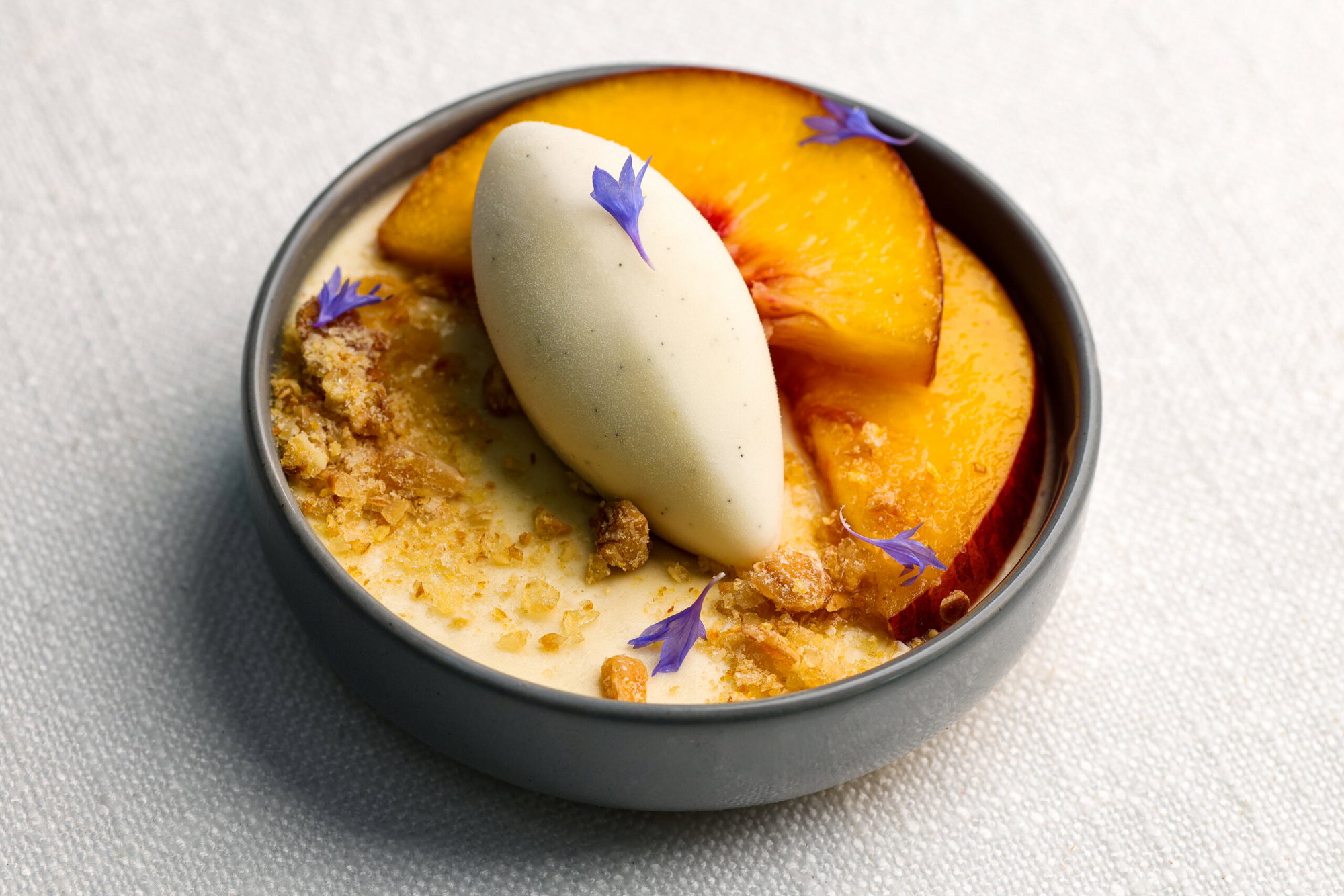
Nahra agrees. “Destination weddings, outdoor weddings, and barn weddings are a growing trend. Places like the Packard Proving Grounds. Clients like the warehouses, they like the barns, they like the distillery downtown. It’s so expensive to do an off-premises wedding and it’s over in five hours.”
While local catering companies are upping their game by providing creative full-service events for off-site parties, the business side of catering is becoming challenging.
An April 2026 survey by the Michigan Restaurant & Lodging Association in Lansing showed Michigan operators are experiencing mounting pressure from persistent inflation and cautious consumer spending.
“What we’re seeing is an industry that remains committed to Michigan’s economy and communities, but one that’s absorbing significant pressure from multiple directions,” says Justin Winslow, president and CEO of MRLA. “(Restaurant) operators are still investing, still creating jobs, (and) still opening new locations, but the economic fundamentals are getting tougher.”
Many of these issues also are being faced by caterers. Food costs lead the challenges; 23 percent of Michigan operators cite food costs as their top challenge, followed by labor costs (19 percent) and the economy (16 percent).
“In the last five years, our prices have gone up 15 percent,” Vicari says. “It’s not profit. Wages have gone up and the cost of food has gone up for us significantly.”
The Seven incorporates the expertise of Sushi Kabar when customers are looking for an upscale sushi experience. // Photos by The Seven
Despite the challenges, caterers are bullish on the future of the business.
“I think we’re back to getting people connected physically, having meetings with the AV equipment that’s necessary, and having a community experience with the food,” Violante says. “People want to get their business together and, once they’re all together, they want to leverage that time.”
Olinik, of Rudy’s Hospitality Group, says, “The goal of a great food program is that people use it. One way to get people to use it is to serve things they want to eat. We want to provide a special experience. We want to design culinary programs for that particular population.”