IDEAL GROUP
PROFILE: Automotive, construction, and materials
management family of companies
FOUNDER AND CHAIRMAN: Frank Venegas Jr.
HEADQUARTERS: Detroit
FOUNDED: 1979
REVENUE: $650M
EMPLOYEES: 750
What happens when a turnaround plan is outside the company?
Thirty years ago, the Ideal Group moved into southwest Detroit and began to hire, train, and provide opportunities for gang members and residents in the surrounding Mexicantown neighborhood.
It was either that or stand by and watch as crime and violence escalated, hindering any chance of an economic and community recovery.
Give credit to the Venegas family for spearheading a civic restructuring — one that traces its roots to former Detroit Tigers pitcher Hank Aguirre. A popular player, Aguirre just missed out on being part of the legendary 1968 World Series championship team, having been traded to the Los Angeles Dodgers prior to the start of the season.
But Aguirre didn’t miss a thing when it came to impacting Detroit’s inner city, neither during his playing days — he was a two-time All-Star player with the Tigers — nor during his time as CEO of Mexican Industries, a successful supplier to the automotive industry that he launched in 1979.
Aguirre knew how much it meant to Mexicantown to have more than one large company that both employed residents and cared about the neighborhood.
So, when his health was failing in the mid-1990s, he presented a challenge to Frank Venegas Jr., who had grown up in Mexicantown and owned and operated Livingston County-based Ideal Group.
Seeking to ensure a strong corporate presence in Mexicantown over the long term, Aguirre exhorted Venegas to move Ideal Group into the neighborhood in a way that only Aguirre could.
“He (Aguirre) used to call my father chickens*#@ because his business was outside the community, and not in the community,” says Jesse Venegas, Frank’s son and Ideal Group’s co-COO, along with his older sister, Linzie.
And when Frank Venegas made the decision in 1995 to fulfill Aguirre’s request, he quickly realized how badly Ideal Group was needed.
“It was a war zone,” Venegas says. “People were scared. You didn’t come out at night.”
Ideal Group had no particular need to enter a war zone. The company had been thriving for 16 years in its Livingston County headquarters.
By the time Frank Venegas received Hank Aguirre’s appeal, Ideal Group had established a strong relationship with Detroit-based General Motors Co. as a major contractor working on various construction projects.
Venegas likes to tell the story of how he financed the start of the company in 1979 by selling a Cadillac Coupe DeVille d’Elegance he had won in a raffle at the Home Builders Association’s Fall Festival. After driving the car for nine days, Venegas sold it for $12,000 and combined the proceeds with other savings to start Ideal Group.
The Cadillac connection proved to be relevant in more ways than one, as the facility Ideal Group took over in 1995 was a portion of the former General Motors Cadillac/Detroit Assembly Plant at Michigan Avenue and Clark Street, first established in 1921.
Shuttered in 1987, what was left from a massive demolition effort were a few buildings along Clark Street. As part of the cleanup, a significant remediation of polluted soil and groundwater was undertaken, given a wastewater treatment plant had operated on the site.
Without GM’s support of the necessary remediation work, neither Ideal Group nor anyone else might have ever opened up shop there.
“It was a Superfund site,” Venegas says. “The Superfund was a real good idea, but they couldn’t get anyone to use it. We were the first people who went through the Superfund, but we couldn’t get anyone to lend us money because of the pollution.”
In the end, Ideal Group was able to work with both a bank and GM to remediate the ground contamination issues.
“It was a good thing for GM,” Venegas says. “It was a good thing for the state of Michigan. It was a good thing for the United States. We were a company that General Motors wanted to do business with. And when we bought this place, we were committed to GM’s business.”
According to Steve Kiefer, who was head of purchasing for GM from 2013 until his retirement four years ago, the success of Ideal Group in Mexicantown was critical — not only for GM’s image, but for its performance as a good corporate citizen.
“The Clark Street plant ended up being an excess plant that we didn’t need,” Kiefer says. “And we all know the history of GM leaving communities. Think of the worst examples, like Buick City in Flint.
“It’s not good for the company to leave facilities, so whenever we have someone take over parts of a facility and keep it operational, it’s good for our image and helps us do something good in the community.”
Of course, bringing restoration to Mexicantown couldn’t be the primary day-to-day focus of Ideal Group. The company had to secure and maintain customer relationships while excelling at production and operations.
Growing steadily, today the company is working on a wide variety of projects, including major construction work at GM’s Technical Center in Warren.
There’s also the University of Michigan Center for Innovation and the JW Marriott Detroit Water Square (both set to open in 2027).
In its pursuit of a relationship with General Motors, a point in Ideal Group’s favor was the fact that the automaker had a need for a strong supplier that fit Ideal Group’s profile, and GM was willing to take some critical steps to make the arrangement work.
Kiefer described GM’s relationship with Ideal Group as beneficial in many ways, largely because Venegas embraced the idea that a customer’s best interests should drive Ideal Group’s priorities.
“I remember (Frank) being one of the most GM-committed suppliers we had, meaning he was such a strong voice for GM,” Kiefer says. “I remember he was the first person to get a Chevy Volt in Michigan, and he was the first guy to get a Chevy Bolt in Michigan. Whatever GM was offering, he wanted to be the first guy to get it.”
Kiefer also lauded Venegas for finding creative ways to help GM deal with excess inventory and materials. In fact, what GM might have seen as clutter to be discarded, Venegas turned into a profitable business.

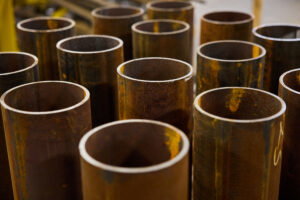
A multifaceted manufacturing operation, Ideal Group and its related companies, like Ideal Shield, heat and treat steel, and manage auto parts, machines, and constuction materials. Below: U-M Center for Innovation in Detroit; an Ideal Contracting project. // Courtesy Ideal Contracting
“We would order stuff and then it wouldn’t get used,” Kiefer says. “It could be rubber gloves and rags, or something as complicated as an engine part. There would be inventory or parts that couldn’t be used, and Frank would say, ‘Let me help you.’ And he turned it into a nice business there at the Clark Street plant.”
As the needs of Ideal Group’s customers evolved throughout the years, the organization began establishing a variety of distinct companies to better organize the operation for both clients and employees.
While each business exists under the Ideal Group umbrella, which today generates $650 million in annual revenue, they operate with their own individual assignments. The six companies are:
• Ideal Shield — provides facility maintenance and protection products including industrial guardrails, plastic sign base systems, safety handrail systems, and steel bollards.
• Ideal Contracting — a construction group offering general contracting services, a certified steel erector, and a special projects group that handles facility updates, emergency repairs, and other special needs.
• Ideal Setech — offers indirect material management services, including consulting and business process outsourcing.
• Ideal Setech Share the Spare — manages inventory of spare parts, primarily for General Motors North America’s stamping operations.
• Ideal Setech Canada — oversees the services of inventory management, warranty and repair management, project management, inventory organization, new product launch support, and decommissioning of machines and materials.
• Ideal Surplus Sales — serves as a reseller of excess and obsolete maintenance, repair, and operations materials for major manufacturers.
According to Frank’s brother, Loren, who played a key role in establishing each of the individual companies, the structure of the overall enterprise has always been driven by something a customer needed, albeit one customer in particular.
“Those are General Motors-focused companies,” says Loren, CEO of Ideal Group. “We were listening to the customer and listening to what their needs were, and then being real focused on whether we could put something together. It’s been really fortunate to have great customers in building the business.”
Ideal Shield, for example, was the result of rising high-profile security threats and the growing desire of the business community to be better prepared.
“The amount of industries — commercial and government clients — that need to protect their buildings and their employees has been a challenge to us, to make sure we can take care of all of them,” Loren says.
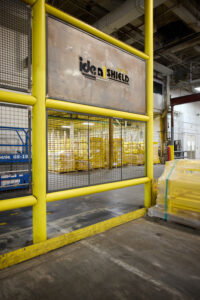
“There’s a growing need to protect people and businesses. It might be a synagogue, or a company wondering if their building could get run into, especially after 9/11. And it wasn’t just federal and state buildings. It was commercial buildings.”
Just as Ideal Group grew in response to the needs of its customers, it formed initiatives in Mexicantown to help spur a revival.
The first thing the leaders of Ideal Group noticed when they arrived in Mexicantown was the random clutter across nearly every street.
As an opening gesture to its new neighbors, Ideal Group arranged to place dumpsters throughout the area. Before long, residents got the idea and began depositing their clutter in the dumpsters.
Just like that, the aesthetics of the neighborhood started improving, and people noticed that Ideal Group was making a positive difference.
But the company still faced one seemingly intractable community problem: how to conduct business in a neighborhood that was rife with gang activity.
Rather than fight the gangs, Frank Venegas hired them.
The experiment took some patience, as the first few weeks saw some gang members taking their rivalries and battles out on the shop floor. But within a month, he says, they were learning how to handle manufacturing work and envisioning different futures for themselves and their families.
“That’s when the magic clearly started to happen,” Linzie says.
“We’re a very people-first organization, so when we started hiring residents from the community, we started learning about who they were, and we learned about their families.”

As the Venegas family began getting to know everyone, they recognized other opportunities. One example was turning two vacant parcels of company-owned property into a community garden using leftover steel bins from General Motors.
Forming relationships with neighbors also meant learning about people’s needs.
“When we visit the neighborhood and host events, soon we’ll hear, ‘My brother’s looking for a job,’ or ‘My kid wants to go to Cristo Rey High School,’ ” Linzie says.
“When you start the relationship, and you start talking to people and building trust, you end up working really well together. The best neighborhoods are the ones that take care of each other.”
At the same time, hiring local gang members meant filling another void.
“We needed to provide opportunities for people after work, along with students after school, and we helped establish the Detroit Hispanic Development Corp. (DHDC), which is a nonprofit on Trumbull Street (a few blocks south of the former Tiger Stadium),” Frank says.
The facility was the home of a program called GRACE, or Gang Retirement and Continuing Education and Employment.
“It was more than just getting young adults out of gangs,” Frank says. “We had to create activities outside of work.”
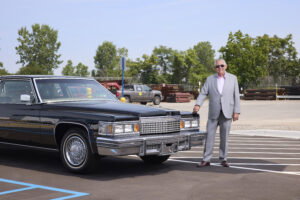
After Frank Venegas Jr. won a 1979 Cadillac Coupe DeVille d’Elegance in a raffle, he sold it and used the proceeds to launch Ideal Group. Years later, his brother, Loren, bought him an almost identical Cadillac as a gift. // Photos by Matt Lavere
Over time a recording studio was added, a summer camp opened, and tattoo removal services were offered. GRACE, for its part, prioritized career training, particularly in robotics, and established a robotics training program at DHDC.
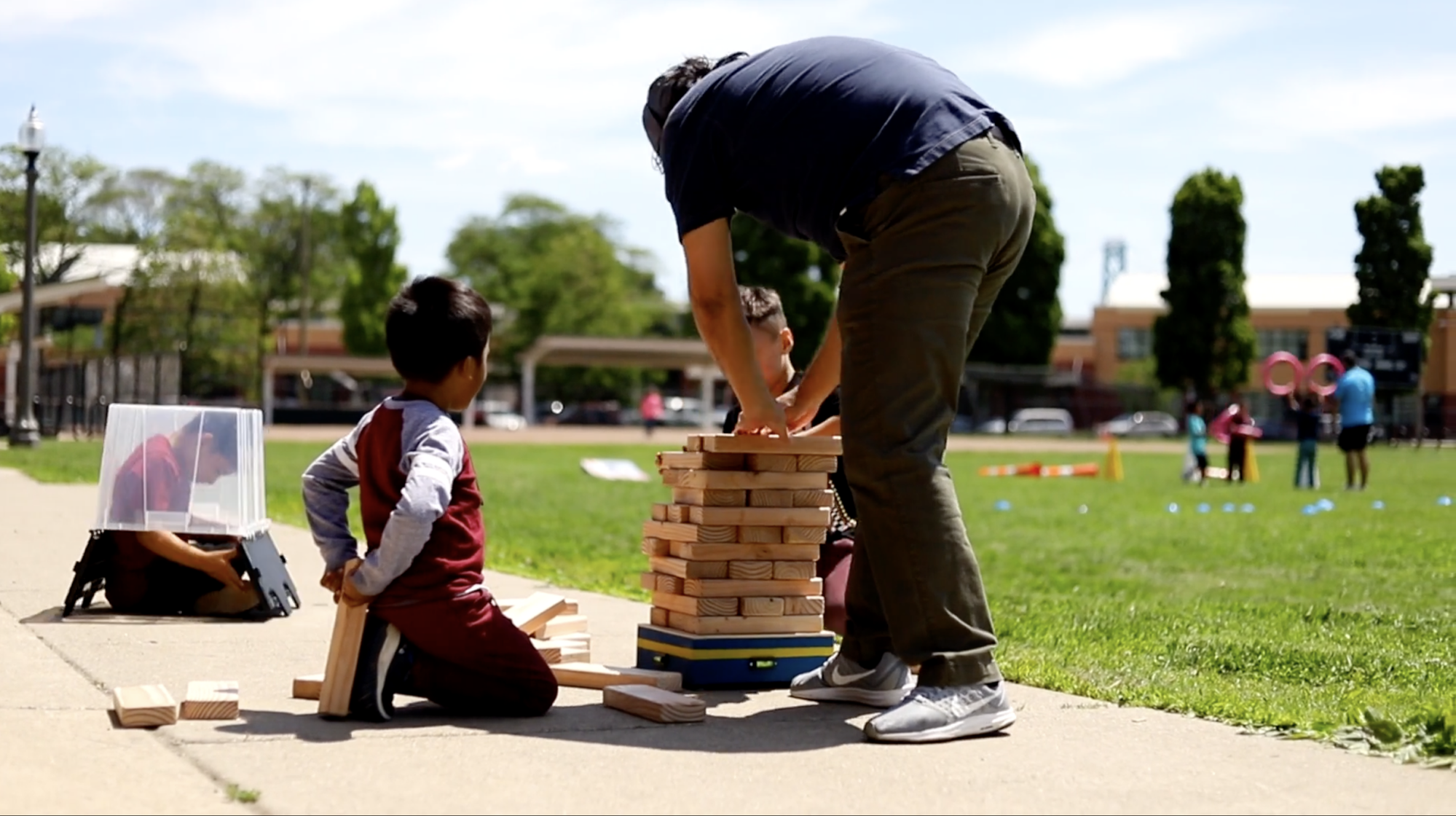
Ideal Group’s involvement in robotics education is extensive. It helped set up a middle school program, based at DHDC, called the First Lego League. It gives local students the opportunity to build miniature-sized robots.
The family didn’t stop there. They recruited skilled workers from GM and others to help teach robotics and help guide development; some students were later hired by GM as engineers.
As the skill sets improved, last April a combined Cristo Rey and DHDC student team won the state competition. They went on to the FIRST Robotics Championship in Houston, which Ideal Group helped support. The series of competitions included winning several local competitions.
“There’s a cost involved for families who might not be able to afford to go to these events, so we’ve also helped send the winning teams to those things,” Venegas says. “There were others who also helped. We’ve been getting more participation now than ever before.”
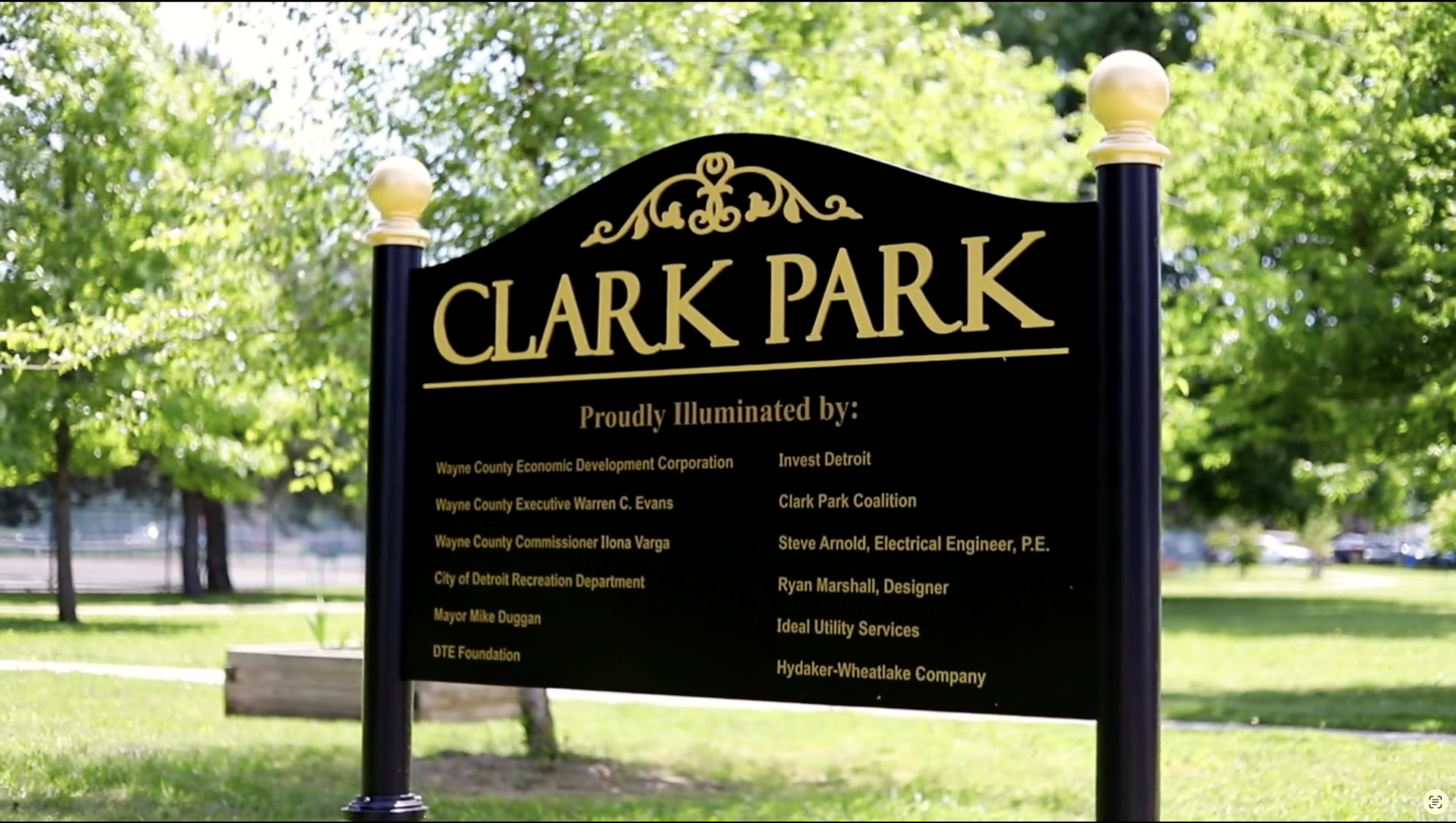
Just as Ideal Group converted blight into community assets, it saw that the same thing was needed at venerable Clark Park, now an urban oasis in the center of Mexicantown.
“People used to be scared of the park,” Jesse says. “People were scared to run through the park because of what might be there. And the facilities there were old. They hadn’t been taken care of for years.”
This was the park where Frank Venegas had played baseball during his youth, and the leadership at Ideal Group saw reason for hope in what Clark Park could be.
“We made a decision to put in stands, so when people would ride by, they would say, ‘Wow, those are cool,’ ” Jesse says.
The family also reached out to musician Jack White, who grew up in the area. He agreed to pay for the rebuilding of the ball fields and the installation of dugouts. Those additions were completed in 2017.
The new commitment inspired other area business owners to get involved, including Bridgewater Interiors in Detroit, which specializes in producing car seats, door panels, overhead systems, and other vehicle components.
“It’s hard to overstate how highly regarded Frank and the family are in the community,” says Ronald Hall Jr., president and CEO of Bridgewater Interiors. “My father was a very civic-minded business leader who really admired Frank’s commitment to this area and appreciated his mentorship in the business community. They were very active peers in the ’90s.”
Ronald E. Hall Sr. and Frank Venegas worked together on issues like hiring and training more local minorities.
“For the majority of Bridgewater’s history here in southwest Detroit, we have largely followed Ideal’s lead in terms of where we got involved as a business that wanted to be supportive of the community,” Hall says.
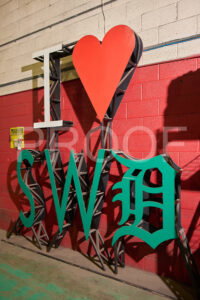
One such endeavor, which Bridgewater joined in following Ideal Group’s lead, is the Southwest Detroit Business Association. The two companies also worked together to help advance the redevelopment of the old Tiger Stadium site at Michigan and Trumbull (now The Corner Ballpark and the headquarters of the Detroit Police Athletic League).
Lorron James, CEO of James Group, a multifaceted shipping, logistics, and supply chain family of companies on Fort Street between the Ambassador Bridge and the Gordie Howe International Bridge, says the example set by Ideal Group and embraced by other area companies has helped transform the neighborhood.
One result is that various business owners see themselves accepting a shared mission to look out for the best interests of the community.
“Southwest Detroit wasn’t that developed in the ’90s, and it was suppliers like Ideal Group, Bridgewater, and James Group that helped sustain and improve the area,” James says of the company founded in 1971 by his father, John A. James. “We purposely built those facilities in areas that were struggling.”
Even as Ideal Group continues to look out for its neighborhood, it also maintains policies to provide support for its employees, including an on-site gym and access to counselors for employees and their families as needed.
In turn, Ideal Group continues to look for talent.
“This year we have 27 interns who were hired on through different colleges, such as Michigan State University and Ferris State University,” Linzie says. “They get to work with two generations of families like ourselves, and we have some employees where an older relative worked here.”
As the company transitions to a new generation of leadership, Linzie and Jesse are steadily taking on more responsibilities.
“Jesse and I really work hand-in-hand overseeing the daily operations,” Linzie says. “All the different companies in our organization have a president, and each of those presidents reports to Jesse and me.”
The leadership transition is tentatively targeted for completion in 2027, but it had its beginnings years ago.
“When I started doing my ABCs, I started filing and doing marketing,” Linzie says, “and my brother got handed a broom and started learning to sweep the floor. The next thing you know, he’s driving a forklift and becoming an ironworker.
“We both had different trajectories in how we learned the business, which is very complementary today because you’ve got seven different businesses, and we’re able to work together well because of those different paths.”
For Venegas’ oldest child, one particular memory from when she was young helps anchor her to the principles she and her brother intend to uphold.
“I can remember, at a very young age, being in my dad’s office,” Linzie says. “We were in Livingston County, and a friend brought his son in and told his son, ‘Smile for Frank.’ And he had braces, and they were so excited he had braces, because they had dental benefits.”
She realized then what it meant for a company to call itself a people-first organization.
“It’s about our family, and how my dad started the business and how he got down here into the community,” Linzie says. “It’s also about building the impact we’ve created in the community, and how we’re going to continue to grow and be led by our values and our core beliefs — those being people first and taking care of your community — and living by the Golden Rule.
“Those values were set forth by my father and my uncle, and they’ve been deeply ingrained in the people at Ideal Group.”
 Value Added
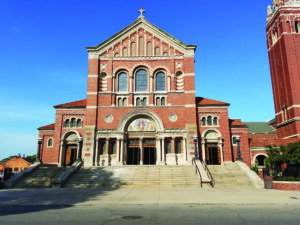
The building that once housed Holy Redeemer High School on Detroit’s southwest side was, for more than a century, the nexus of learning and community activity in a neighborhood that needed as much of that as it could get.
Founded in 1882, Most Holy Redeemer served more than 1,000 students at the peak of its enrollment in the 1970s. Adding to its radiance was an appearance in several scenes in the 1987 film “The Rosary Murders,” starring Donald Sutherland as Fr. Robert Koesler.
But declining enrollment resulted in Holy Redeemer High School being shut down in 2005, leaving a gaping hole in the Mexicantown neighborhood. The elementary school is still in operation.
To Detroit native and Ideal Group Chairman Frank Venegas Jr., the emptiness of Holy Redeemer High School didn’t need to be the end of the story.
So, he took the lead and encouraged other local businesses to help in the revitalization effort. The vision was to launch a new high school in the same building.
The project took three years and, in 2008, Detroit Cristo Rey High School opened. Its educational mission prioritizes low-income families.
Classwork activities place a special emphasis on science, technology, engineering, and math (STEM) skills to better position local students for career opportunities.
Cristo Rey operates as a distinctly Catholic co-ed school under the auspices of the Archdiocese of Detroit, but enrollment is open to all students regardless of their faith background.
As part of their enrollment agreement, each student works at a sponsoring company for one school day per week.
To date, since helping to establish Cristo Rey, Ideal Group has invested more than $1 million. The company continues to support the school and its students financially, in addition to offering a work-study program.
For Loren Venegas, president of Ideal Group, the commitment to Cristo Rey is deeply personal.
“The students and the school are really dear to my heart because I was one of the original board of trustees to get it going,” Loren says. “(The building has) been there for 143 years.”
General Motors, at the urging of Frank Venegas, founder of Ideal Group, also played a major role in the development of Cristo Rey as a catalyst for local youth education and employment.
“At GM, I think we were the single biggest employer of Cristo Rey kids,” says Steve Kiefer, who served as head of purchasing at GM during the time of the school’s founding. He also worked closely with Ideal Group on the business side.
Kiefer, who lost his son in a distracted driving accident in 2016, now helps teach Cristo Rey students and others about the dangers of such behavior.
“I introduced a distracted driving simulator, and Frank was one of the first to invest in it and to deploy them into the Cristo Rey School, so all the kids who are going to be new drivers will learn about the dangers of distracted driving. He’s been very supportive of that.”
Other area business leaders say they were glad someone from the community urged them to get involved.
“We’re supporters of Cristo Rey because Frank is such a champion, and he asks that everyone in his circle support the school,” says Ronald Hall Jr., president and CEO of Bridgewater Interiors in Detroit. “One reason for supporting Frank’s goodwill is just out of the respect people have for him.”
Ideal Group continues to be represented on the Cristo Rey High School board by Pamela Savedes, director of shared services at Ideal Group.
Overall, graduating seniors have had a college acceptance rate of 100 percent since 2012.
— Dan Calabrese