Detroit’s Corktown, already celebrated as the city’s oldest neighborhood and steeped in history, is now on the cusp of becoming a vibrant community hub by offering an early education center for children, space for artists and chefs, and a gathering place for families, businesses, and organizations — all brought to life through the shared vision of two unlikely compatriots.
One came to the project after a 40-year business career, largely spent on the West Coast, that taught him about the power of investing in people and helping them thrive.
The other partner brought forth wisdom gained and the value of community understood from a young age, having grown up in an immigrant family that used food as their way to connect, gather, and heal.
Together, the pair has taken on a considerable amount of work, and no small degree of risk, to give Corktown in particular — and Detroit in general — a resource they believe can set the stage for a stronger community moving forward.
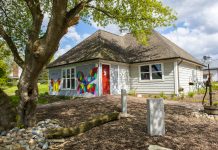
Kintsugi Village, spearheaded by Paul Spiegelman and Hamsa Yaqo, will occupy a former school building situated at 2020 14th St. in Corktown, directly east of the newly restored Michigan Central Station.
The nonprofit organization will provide a variety of opportunities for area residents, including an early childhood education center, a culinary training center, various job training opportunities, and an artist incubator where local artists can not only work on and display their art, but also learn about the business side of their avocation, with the potential to teach children.
Kintsugi Village’s etymology traces to the Japanese art of Kintsugi, which involves repairing cracked or broken pottery by using a lacquer mixed with gold, silver, or platinum to seal the cracks. Rather than attempt to mask the repair, Kintsugi seeks to highlight it — embracing the idea that the damage and repair are part of the object’s unique journey, and they actually add to its beauty.
“It’s a metaphor for life,” Spiegelman says of Kintsugi. “What’s broken becomes more beautiful. That resonated with me.”
Spiegelman spoke with passion about why he and Yaqo chose Detroit for the new center, emphasizing the city’s resilience and strength. He encourages Detroiters to think of the word “broken” as a powerful story of transformation. With a philosophy that embraces vulnerability, yet places rejoining and mending at the core, Spiegelman and Yaqo hope to give Detroit and its people opportunities not only to remain in the community, but to find ways to grow and prosper within it.
A native of Los Angeles, Spiegelman moved to Detroit a year ago. He has spent the past 15 years helping small businesses develop community connections while learning skills that can help them thrive and grow.
This has been the mission of an organization he formed called Small Giants, where the basic tenet was to help smaller companies achieve success like the larger ones featured in Jim Collins’ classic business book, “Good to Great.”
Spiegelman’s business journey began in 1985, when he and his two brothers started a bootstrapped company that provided call-center services for the health care industry. While it may have cut against the business culture of the time, which Spiegelman calls the command-and-control model, the brothers wanted to create an environment in which employees would love coming to work every day.
Based in Los Angeles, the brothers launched Beryl Health from an unused conference room in the law office they shared with their father. Older brother Mark and younger brother Barry joined Paul in setting up an operation that would take the calls of those using medical alert systems.
“We would talk to them through a speaker in the little unit we put in their homes, and we would find out what kind of help they needed — whether it was a paramedic or a neighbor or something like that,” Spiegelman recalls.
But Beryl Health almost went out of business after its first year, before an unlikely confluence of events saved the day.
“I was working on a Saturday night and a call came in from a 93-year-old woman,” Spiegelman says. “It turned out she had been beaten and stabbed and locked in a closet. And we were able to save her life.”
That got the company featured in a front-page story in The Los Angeles Times, which kept the company going — and kept the three brothers trading shifts and sleeping on cots in the interim.

“We had no money to sell units to the public, so we went to hospitals and had them offer our units to people who were leaving the hospital,” Spiegelman says. “One of our hospitals called and asked if we could take on a different project for them, which was people calling from the community and looking to be matched up with doctors.”
Beryl took on that challenge, and did so well with it that it eventually opened the door to a contract with HCA, the largest privately held hospital company in the country. The HCA opportunity led to Beryl moving to Texas.
In 1994, the brothers sold the original medical alert side of the business for “a few hundred thousand,” then focused on growing the newer part of the business to $40 million in annual revenue and more than 400 employees by the time it was sold for an undisclosed but “significant price” in 2012.
As he and his brothers were building the business, Spiegelman read a book by Bo Burlingham titled “Small Giants,” which applied many of the principles Collins touts in “Good to Great” to make them work for smaller companies.
Spiegelman found the ideas in “Small Giants” to be a good fit for his own developing philosophies about business, and reached out to Burlingham to see if he would write a
foreword to a book Spiegelman was writing, “Why is Everyone Smiling?”
Burlingham agreed, but Spiegelman wanted more. “He wrote a foreword for my book, and we became friends,” Spiegelman recalls. “But it took me two years to convince him to help pull this community together.”

The Small Giants organization, formally launched in 2010, focuses on providing content, workshops, and mentoring programs to teach small business owners how to create the most positive experiences for employees.
Since 2017, Small Giants has hosted a conference, known as its Summit, each year in Detroit — giving Spiegelman an opportunity to develop an appreciation for the city and what it could be.
The Summit provides an opportunity for as many as 300 leaders of businesses to share stories and tactical tips on how to achieve the vision Spiegelman used to build the organization. Since Yaqo came on board, the group’s signature offering has been the Small Giants Academy, a one-year certification program for next-generation leaders.
“Founders and CEOs like me, who have been around a long time, need to understand and support this,” Spiegelman says. “If these principles are going to sustain our companies long-term, it has to happen at the next level.”
It was at one of the Small Giants Summit meetings in Detroit that a participant surprised Spiegelman by questioning his move toward the nonprofit arena.
“At our Small Giants conference, we have a Hall of Fame program and we recognize some of those leaders every year,” Spiegelman says. “The next morning, on the stage, I interviewed the winners of the awards, and one of the guys turned to me and said, ‘I want to put you on the spot, Paul. You had this business career and you had Small Giants, and you’ve accomplished a bunch of things. Now you’re doing this. What are you doing? Why are you doing this?’ ”
Spiegelman knew exactly how to answer the question. “Because I’m still chasing purpose,” he responded. “That is in all of us, and that will go on forever.”
The longer Spiegelman owned and led Small Giants, the more he developed an interest in applying his achievements on behalf of business at the community level.
As it happened, that tracked nicely with the interest of one of his top lieutenants, Yaqo, who joined the organization in 2017 as executive director.
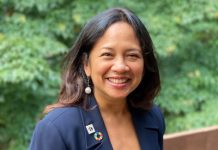
After eight years working for Small Giants and gaining an appreciation of its mission, the Iraqi native turned 30-plus-year Detroit-area resident had given a year’s notice of her intention to seek a new mission.
Yaqo has lived in the Detroit area since 1992, shortly after her family immigrated from Iraq when she was 12 years old. The emphasis on culinary skills particularly resonates with Yaqo because her cultural upbringing revolved around cuisine.
“I grew up in a household where it’s all about food and family and community,” Yaqo recalls. “The way my parents show love is through food. My parents, over the years, have hosted literally thousands of people. Family dinner night would be six people, but food would be for 50 because it was all about showing love and generosity.”
Reflecting on her cultural upbringing, Yaqo expresses a vision in which food helps to build community, where culinary skills among young people plant the seed for the community’s strength and cohesion.

“Eight years into Small Giants, I got to a place where even though the community was full of incredible people, I brought it to a certain point and it was beyond my skill set,” Yaqo says.
In addition to that belief, she felt a strong desire to do something that involved children — and that’s when she informed Spiegelman that she would be looking for an opportunity along those lines.
Spiegelman, grateful for the advance notice of a year, but also thinking in his own right about new challenges that would carry meaning, started sharing ideas of his own.
The more Spiegelman and Yaqo talked, the more they agreed that the calling for both of them was to create a community hub in Detroit that could introduce new opportunities and resources to a once vibrant neighborhood now being revitalized.
The first step was to look for property, specifically an existing building that could house the vision, complemented by open space.
The building they found, which is now being transformed into Kintsugi Village, was the former St. Vincent Middle School, part of St. Vincent de Paul Parish. Built in the 1960s, the Catholic school closed in 2002. In 2014, a co-working space called Saint Vincent Corktown opened, but it hasn’t been operational since 2019.
Enter Sachse Construction in Detroit, which has taken on the task of refurbishing the building and converting it into the community hub Spiegelman and Yaqo envision.
In a nod to Corktown’s deep historical roots, elements of the original school, including
vintage lockers and classroom clocks, will be preserved and incorporated in the space, ensuring the past remains part of the story being built.
Of course, even with an inspiring vision, practical concerns come into focus.

“At first, the big question was parking,” Spiegelman says, quickly emphasizing that the property now under renovation will, indeed, have enough parking for all the programming that will take place there. And it will be a lot.
When completed, the first floor will house the early childhood education center, with interactive rock-climbing walls and other fun activities for kids. The second floor will serve as an artist and maker incubator; an art gallery will occupy the center area, surrounded by meeting rooms on the perimeter that will be available for businesses and organizations to rent for meetings, creative sessions, or retreats.
The third floor, where nuns once resided, will serve as the hub of culinary education, where children and adults can take cooking classes, and chefs will prepare meals and fulfill catering orders.
It also will be made available for small weddings and family events.
Outside, a patio that overlooks Michigan Central Station will be equipped to host live music and other events, in addition to offering a playground and a community garden.
“It will be a place where people can have a meditative moment,” Yaqo says.
On the same property, a farmers-style market is planned to give children realworld opportunities to learn about money, shopping, marketing, and entrepreneurship in a supportive, hands-on environment.
According to Spiegelman, Kintsugi Village, when fully staffed and operational, will have an annual operating budget of $1.5 million.
As a nonprofit, that money will have to come from various forms of fundraising.
Financing the purchase and renovation of the property, however, has required debt financing that Spiegelman secured with the help of his past earnings.
It also will be necessary to fundraise to pay back that debt, he says.
The early childhood education center stands out as the first-among-equals of Kintsugi Village’s offerings. Spiegelman and Yaqo say they intend to pay teachers above market rate. So far, they’ve hired two teachers, and plan to add 15 to 18 teachers by January.

“Our first two teachers were hired not just because they wanted to be teachers, but because they had a passion for something happening in another part of the building,” Yaqo says
Former Detroit City Council member and longtime community activist Sheila Cockrel says she has talked informally with Spiegelman and Yaqo about their plans, and believes they’re addressing the right concerns for Corktown and the broader area.
“I think the child preschool is an important priority,” Cockrel says. “It’s paying homage to the historic use of the building, and there’s a need because, as I understand it, it’s going to be a program that is tied to ability to pay. And that will be important. There’s a mix of income levels in Corktown and Mexicantown.”
Yaqo refers to Detroit as a “day care desert,” where access to early childhood education is limited and inconsistent. With quality programs in short supply and long wait lists for the few that exist, Kintsugi Village recognized both a pressing need and a meaningful opportunity to offer something different.

“We chose the 3-to-5-year-old segment because we know that’s really the most formative time for the formation of the brain and activity and behavior,” Yaqo says.
A critical distinction is the emphasis Kintsugi Village plans to put on life skills, rather than academic skills, in the early childhood programs. That includes teaching children about finances, as well as giving them insight on topics such as where food comes from.
To that end, the future farmers-style market will be run by the children themselves, which adds a real-world element of business and community organizing education to the lessons about food and general life skills.
While the early childhood education programs will not be free, the founders hope to help families access funds so that much of the cost will be subsidized, allowing registered families to pay between $100 and $250 per month.
Other groups that can benefit from some business acumen include local artists and chefs, all of whom will find themselves with a new resource at Kintsugi Village.

While the organization isn’t going to give them jobs, Spiegelman and Yaqo hope to teach the artists and chefs the skills that will help them monetize their work and give them a better shot at turning their interest into a career, and preferably staying in the Detroit area.
“When we see people like these artists or these chefs, these people who have wonderful talent, they’ve got to work 9-to-5 jobs just to get by,” Yaqo says. “Wouldn’t it be great if we could flip that?”
Spiegelman and Yaqo hope that this new direction will start to address the problem of too many local artists leaving Detroit for Los Angeles or New York once they reach the point where they’re ready to support themselves entirely through their art.
According to Cockrel, Kintsugi Village should be well-received, in part, because Spiegelman and Yaqo are embracing the right attitude about the community.
“I’ve been doing this long enough to know when people are aiming for the highest standard, as opposed to the what’s-the-lowest-level-I-can-get-Detroit-to-tolerate standard,” Cockrel says. “They’re absolutely approaching this with the idea of creating something that’s going to be outstanding, not just OK, for Detroit — which I really appreciate.”
The founders acknowledge that, because their background is in business and not in nonprofit programming, they will need support from others in the community to excel at executing the Kintsugi Village vision. To that end, they have established a group of collaborators, including:
• Ad agency designer Kristina Brumby
• Boggs School co-founder and executive director Amanda Rosman
• JLL project manager Pri Ramaswamy
• Wild Child Playschool founder and executive director Lindsey Richards
• Wellness initiative adviser Simone Cowan.
While the facility is expected to be operational by Sept. 20, the grand opening for the community will take place on Oct. 11. And it won’t be long after that when the building will be humming with activity.
Spiegelman and Yaqo strongly encourage as many community members as possible to attend the grand opening.

“It’s really about showcasing not just the campus, but the campus and the people who are involved,” Yaqo says. “Two days later, on Oct. 13, we’ll have two classes full. So we want people to show up and be excited and enjoy the festivities.”
Cockrel predicts a warm embrace from the surrounding area.
“I think it will be very welcome in the neighborhood,” Cockrel says. “And they have adequate parking, which is really important. The folks at Michigan Central and Newlab, in my opinion, haven’t figured that out. They can’t get people to park in the structure they built, and it adds to the strains on the neighborhood. Because Kintsugi Village has built-in, adequate parking, I think that’s deeply appreciated by people.”
While the focus now is on Detroit, Spiegelman emphasizes that he envisions the concept spreading to other cities. How that might happen remains an open question.
“One option would be for us to actually do it somewhere else, or find other cities that want to do it and be part of it,” Spiegelman says. “The other idea is to build a roadmap or a kind of recipe book that could be taught so other municipalities can implement this concept in their local area.”
In the course of transitioning to focus on Kintsugi Village, Spiegelman is transferring his interest in Small Giants to new owners. In turn, both he and Yaqo are preparing to make Kintsugi Village their full-time jobs.

Given the staff, the refurbished facilities, and the clear need of the community, the two founders expect Detroit and its residents to be stronger as a result.
As Spiegelman notes, Kintsugi Village isn’t just a restored building; it’s a living, breathing investment in people, place, and purpose.
From empowering the next generation to uplifting artists and entrepreneurs, it’s a space where broken pieces are being joined with intention, and where a stronger, more beautiful community can emerge.