Ford Motor Co. in Dearborn has released its 2023 Integrated Sustainability and Financial Report, which details the company’s progress on its commitment to create a more sustainable, inclusive, and equitable transportation future.
Building on more than two decades of leadership in sustainability reporting, the report shares new data that shows Ford is on track to achieve carbon neutrality no later than 2050 across its vehicles, operations, and supply chain.
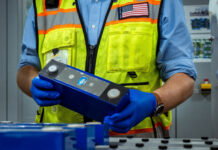
It also highlights progress on initiatives aligned with the company’s commitment to source raw materials that are responsibly produced, and make its EV and battery supply chain more transparent.
“We believe the long-term success of any business is inextricably linked with creating value for customers, employees, and communities, while also caring for the planet,” says Bill Ford, executive chair of Ford.
“We are undertaking a massive transformation to lead the electric and connected era of transportation and are committed to being transparent about our progress and opportunities for improvement. We are excited and optimistic about the future and look forward to making carbon-neutral transportation a reality.”
In 2022, Ford made a number of advancements toward carbon neutrality, including introducing new EVs, upgrading facilities, investing in carbon-free and renewable electricity, and using its purchasing power to help scale low-carbon materials.
“We’re also creating new visibility and accountability for a global EV and battery supply chain that upholds our values,” says Cynthia Williams, global director of sustainability, homologation, and compliance at Ford.
Around the world, Ford reports it is dedicating more than $50 billion from 2022 through 2026 to develop and manufacture EVs and batteries. The company is on the path to reach its targeted annual production run rate of 600,000 EVs by the end of 2023, and more than 2 million by the end of 2026. By 2030, half of Ford’s global vehicle sales volume is expected to be electric.
The report outlines statistics on the impact of this strategy, including the carbon dioxide emissions savings of driving a Ford EV. Estimates show that, depending on the model, driving a Ford EV could reduce lifetime carbon dioxide emissions by as much as 60 percent when charged with U.S. grid-average electricity compared to driving a similar internal combustion engine vehicle.
For the F-150 Lightning, the carbon dioxide reduction over the vehicle’s lifespan is equivalent to the carbon dioxide saved by not using approximately 8,777 gallons of gasoline. The F-150 Lightning pickup is America’s best-selling electric pickup when it began its first full month of dealer retail sales in June 2022.
Beyond reducing tailpipe emissions from its vehicles, Ford’s commitment to carbon neutrality focuses on reducing emissions from the facilities, processes, and electricity that support the company’s operations and global supply chain.
Ford reports it reduced Scopes 1 and 2 emissions by 35.4 percent since 2017, which accounts for direct emissions from its operations and indirect emissions from energy purchases. Ford also invested more than $26 million in facility upgrades to improve energy efficiency and conservation across its facilities and manufacturing processes, helping the company achieve a 40 percent reduction in absolute manufacturing greenhouse gas emissions from 2017.
The company also made strides to transition to carbon-free electricity usage, incorporating 60.6 percent carbon-free electricity into its operations globally, including all purchased electricity for manufacturing in Europe and Mexico. Globally, 42.6 percent was renewable electricity.
Between 2019 and 2022, Ford additionally reduced its overall Scope 3 emissions, which include emissions from suppliers, products, and other non-facility sources, by an estimated 23 percent.
Ford states it was the first American automaker to include its global supply chain on the Manufacture 2030 platform, inviting 3,000 Tier 1 supplier sites to participate in the program designed to help them measure, mitigate, and reduce emissions. Ford plans to invite additional Tier 1 and indirect suppliers to participate in Manufacture 2030 in 2023.
Ford works to ensure that the company’s global supply chain protects the environment and human rights. As it builds a new EV and battery supply chain, the company is taking an important first step to secure raw materials directly from mining companies aligned with Ford’s corporate policy. The report details several new initiatives to increase transparency, traceability, and due diligence.
In 2021, Ford initiated EV and battery supply chain mapping and auditing to better understand the origins of raw materials in its EV supply chain, including nickel, lithium, cobalt, and graphite. To date, the project has conducted 30 supplier audits along these four critical mineral battery supply chains at all tiers to the mine site.
In early 2023, along with its suppliers, the company underwent an audit of its nickel, lithium, and cobalt due diligence management systems. Building on that process, Ford strengthened its corporate practices, including introducing new environmental, social, and governance requirements into its sourcing agreements.
Across its broader supply chain, Ford continues to work closely with its suppliers and with third-party assurers like the Initiative for Responsible Mining Assurance, Responsible Minerals Initiative, and Responsible Business Alliance to identify and address environmental and human rights issues in its supply chain against comprehensive criteria outlined in the company’s Supplier Code of Conduct.
In 2022, Ford trained 844 purchasing employees, 2,647 other Ford employees, and 979 suppliers in supply chain sustainability topics, including anti-corruption, fair labor, and environmental protection practices.
In turn, the company’s philanthropic arm, Ford Motor Company Fund, partners with nonprofits and community leaders to help meet the unique needs of communities in more than 40 countries around the world.
In 2022, Ford and Ford Fund made more than $64 million in charitable contributions, investing in partnerships and programming across three impact areas: unlocking access to essential goods and services; opening pathways to education for the future of work; and diversifying the pipeline of entrepreneurs.
To read the Integrated Sustainability and Financial Report and learn more about The Road to Better, visit sustainability.ford.com.